Gaps in the National Plastic Waste Management Legal Framework in Iran
An examination of Iran’s national legal framework for plastic waste management reveals several significant gaps across various components of the system. These gaps are found in areas such as progress measurement indicators, identification of key stakeholders, regulations, management equipment, enforcement of occupational safety standards, and inspection regulations for waste management facilities. Examples include the absence of inspection checklists for waste, lack of collaboration with technical advisory groups, absence of communication channels with the informal sector, and insufficient attention to product design for recyclability.
Root Causes of the Gaps
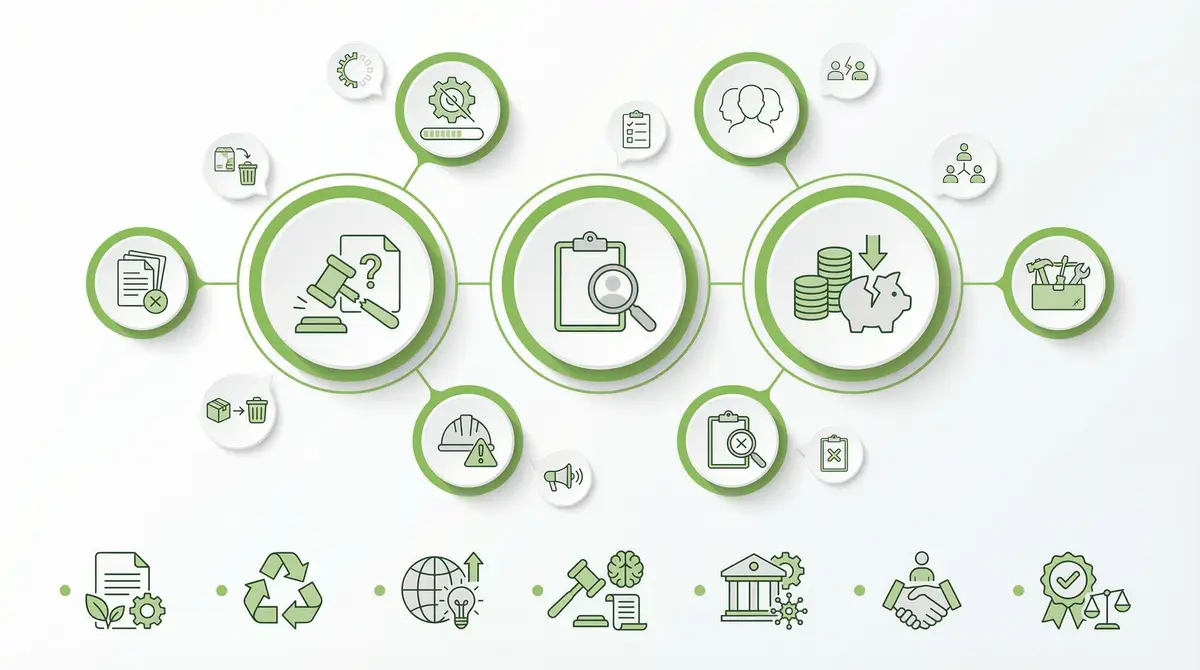
Using the Ishikawa diagram, the main causes of these gaps were identified as:
• Ineffective policymaking: Neglect of environmental criteria in policymaking, lack of comprehensive policies, and absence of clear legal provisions.
• Lack of management and oversight: Failure to meet management system requirements and lack of monitoring of financial and operational matters.
• Financial issues: Insufficient budget allocation, lack of transparency in revenues, and barriers within the banking system.
Proposed Solutions for Improving Plastic Waste Management
– Incorporating environmental considerations into policymaking and revising the existing legal framework.
– Focusing on the waste management hierarchy, emphasizing waste reduction and recycling.
– Expanding global innovations in plastic waste management and adapting them to local conditions.
– Developing training programs for environmental court personnel and executive authorities.
– Encouraging investment in waste management infrastructure and strengthening the recycling market.
– Integrating the informal sector into the waste collection and management system.
– Defining clear qualifications for monitoring, control, and legal prosecution of offenders.
Conclusion
– Improving plastic waste management in Iran requires structural reforms in policymaking, strengthened oversight, and stakeholder engagement.
– A focus on the circular economy and waste reduction through sustainable product design can play a key role in reducing plastic pollution.
Extracted from the doctoral thesis of Ms. Khatereh Feyz Bakhsh Vaghef